

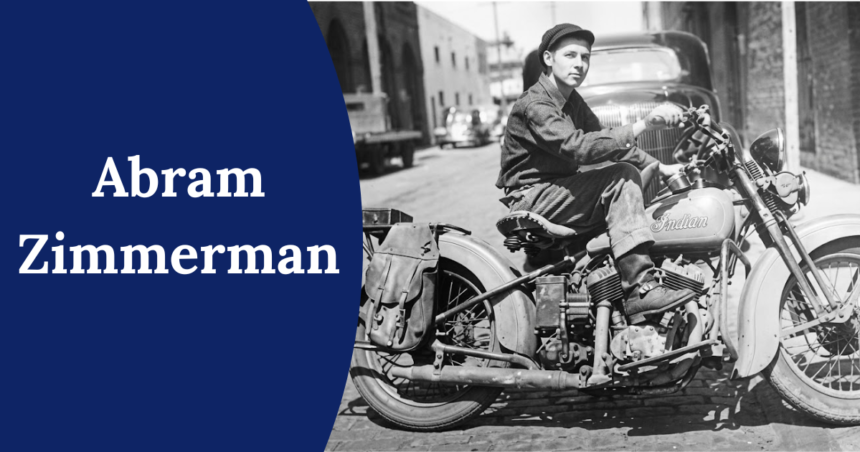
Abram Zimmerman never sought fame, yet his name carries profound weight in American music history as the father of Bob Dylan. Born on October 19, 1911, in Duluth, Minnesota, to Jewish immigrants who fled persecution in Odessa, he built a quiet life marked by resilience and faith. Battling polio as a young man, he raised his family in small-town Hibbing, running a modest appliance business while instilling values that would shape one of the world’s most influential artists. His story reflects the broader immigrant experience, cultural preservation, and the complex bonds between tradition and artistic ambition. This article explores every aspect of Abram Zimmerman’s life, specifically his early years, his role as a father and community member, and the lasting legacy he left behind.
Early Life and Family Roots in Duluth
From Odessa to America: The Zimmerman Immigration Story
Zigman and Anna Zimmerman fled violent persecution in the Russian Empire, escaping the antisemitic pogroms that swept through Odessa after 1905. These attacks terrorized Jewish communities throughout Eastern Europe, forcing families to abandon their homes and seek safety elsewhere. Zigman arrived in Duluth around 1907, drawn to the port city where other Odessa immigrants had already settled. He worked as a peddler initially, carrying his shoe-making trade from the old country into this new landscape. Anna and their children joined him approximately three years later in 1910, completing a journey that over 2 million Yiddish-speaking Jews from Eastern Europe undertook during that era.
The family settled in Duluth because they knew people there. “You always settled where you knew somebody,” Abram later explained to his son’s biographer. They moved several times within the city, from 22 1/2 W. First St. to 221 N. Lake Ave. in 1914, then to 725 E. Third St., and eventually to addresses on East Fifth Street. As Orthodox Jews, they joined Tifereth Israel synagogue, a pillar of Duluth’s Russian Jewish community that served families who maintained kosher practices and preserved their cultural traditions.
Growing Up in a Jewish Immigrant Household
Abram arrived as the fifth of six children in 1911. By the 1920s, about 20,000 Eastern European Jews had settled in Minnesota, creating networks of support through synagogues, kosher butcher shops, and bakeries. The Zimmerman household centered on faith and hard work. Zigman opened a shoe store with Jacob Crystal in the early 1920s, though he later returned to clerking when the business struggled.
Childhood Work and Musical Beginnings
Financial necessity shaped childhood for immigrant families. Abram started working at age seven, selling newspapers and shining shoes to contribute to household income. “Everybody worked when they were 7 years old,” he later recalled.
Music provided relief from economic pressures. Abram played violin alongside his brother Jack, while their sister Marian performed on piano. The siblings formed a family band that entertained at local high schools and community events, demonstrating how creativity flourished even in modest circumstances.
Education and Early Adulthood
Abram attended Liberty School, Washington Junior High, and Central High School, where he graduated in 1929. That timing proved significant. The stock market crashed that same year, plunging America into the Great Depression. He found work as a supervisor at Standard Oil, a position that provided stability when millions struggled to find employment. His reliability and consistency became defining traits during an era that demanded both.
Building a Life: Marriage, Polio, and the Move to Hibbing
Meeting and Marrying Beatty Stone
Abe met Beatty Stone at a New Year’s Eve party in Duluth at the end of 1931. She came from Hibbing, creating what counted as a long-distance relationship during that era given the modes of transportation available. Snow slowed their courtship, but the connection proved strong enough to endure the distance. They married on June 10, 1934, at her mother’s home when Abe was twenty-two and Beatty just nineteen. The country remained gripped by the Great Depression, newspapers filled with stories of Bonnie and Clyde and John Dillinger.
The newlyweds moved in with Anna initially, then relocated to 503 E. Third St. and later 519 Third Ave. E.. Whereas Abe worked as a supervisor at Standard Oil, Beatty found employment as a saleswoman at a clothing store. Financial constraints meant they waited six years before starting a family.
The Birth of Robert and David Zimmerman
At five past nine on the evening of May 24, 1941, Beatty gave birth to their first son at St. Mary’s Hospital. The boy weighed seven pounds and one ounce, receiving two names: Shabtai Zisel ben Avraham in Hebrew, and Robert Allen Zimmerman for the wider world. He became known as Bob or Bobby almost immediately.
David Benjamin arrived in February 1946. Around the same time, Abe contracted polio during what had reached epidemic levels.
Battling Polio and Its Lasting Impact
“During the polio epidemic, I only stayed one week in the hospital because they didn’t have the equipment,” Abe later recalled. “I’ll never forget coming home; I had to crawl up the front steps like an ape”. He stayed home for six months, then lost his position at Standard Oil. “My father never walked right again and suffered much pain his whole life,” Bob later said.
Starting Over in Hibbing with Zimmerman Appliance
Under those circumstances, the Zimmermans moved to Hibbing in 1947 when Bobby was six years old. They needed relatives nearby for support. Abe’s brothers Maurice and Paul had established Micka Electric on 5th Avenue. The family initially lived with Beatty’s widowed mother, Florence Stone, before Abe joined his brothers in partnership at the appliance store, bringing his administrative experience from Standard Oil to the business.
Abram Zimmerman as Father and Community Member
Raising Bob Dylan in a Jewish Household
Together with Beatty, Abram created a home centered on Jewish tradition and cultural preservation. On May 22, 1954, Robert became a bar mitzvah at Agudas Achim, Hibbing’s only synagogue, with 400 guests attending. The celebration reflected the family’s standing within the community. Abram served as president of B’nai Brith, while Beatty held the presidency of the local Hadassah chapter.
Abram brought quiet dedication to fatherhood. He rarely spoke about his feelings, yet his love manifested through consistent action and sacrifice. He pushed Robert toward responsibility, requiring him to help clean the family store. Hard work and integrity formed the core values he emphasized daily.
Life as a Businessman in Small-Town Minnesota
Zimmerman Appliance demanded long hours of customer service, bookkeeping, and constant competition. Abram earned respect as a fair and honest businessman who valued relationships over quick profit. Customers trusted him because he stood behind the products he sold and proved genuinely dependable.
Active Participation in Hibbing’s Jewish Community
The Zimmermans attended synagogue regularly and observed Jewish holidays faithfully. They helped other Jewish families maintain cultural traditions in a region far from major Jewish centers. Abram understood that belonging to something larger mattered deeply.
The Complex Father-Son Bond and Lasting Legacy
The Distance Between Tradition and Artistic Dreams
Tension simmered between Abram and his eldest son throughout Bob’s teenage years. Abram valued stability and predictable futures, qualities forged by Depression-era hardship. His son showed signs of wanting something wilder, something less certain. When Bob dropped out of university and headed to New York City to pursue music, it was not the path Abram had hoped for. He had told one of Bobby’s teachers, “Isn’t an artist a fellow who paints?” when informed his son possessed an artist’s nature.
Bob did not invite his parents to his 1965 wedding to Sara Lownds, and he did not tell them about his serious motorcycle accident in 1966. Those silences proved painful for Abram and Beatty.
Abram’s Death and Bob Dylan’s Grief
When Abram suffered a fatal heart attack in May 1968, Bob returned to Hibbing for the funeral. By all accounts, he was deeply shaken. In Chronicles: Volume One, Dylan reflected that his father’s death left him with the grief of things that could never be said.
How the Zimmerman Family Legacy Lives On
Interest in Abram Zimmerman’s life increased significantly after the 2024 biographical film about Bob Dylan’s early years. Jakob Dylan, James Dylan, and Pablo Dylan have pursued creative careers, continuing the artistic spirit that flickered in Abram’s childhood violin playing.
Abram Zimmerman’s Place in American Immigrant History
Historians recognize Abram as an important figure in the broader story of Jewish immigrant life in America. His family’s journey from Odessa to Duluth represents the experience of hundreds of thousands of Eastern European Jews who came to the United States seeking safety and opportunity. Abram and Beatty share a stone at Tifereth Israel Cemetery.
Also Read: Bridget Rooney
Conclusion
Abram Zimmerman’s story extends far beyond his famous son. His journey from immigrant child to small-town businessman captures the resilience that defined a generation. Though he and Bob never fully bridged their differences, Abram’s values shaped the artist who would change American music forever. His legacy lives on through his grandchildren’s creativity and stands as testament to countless immigrant families who built new lives through hard work, faith, and quiet determination.